
Guides
Ever scroll through New York creator contracts?
Ever scroll through New York creator contracts? See how deal terms, usage rights, exclusivity, payment timing, and New York law shape creator income.
What to take away
- An ever scroll through New York creator contracts shows the same handful of clauses deciding who gets paid, when, and for how long.
- Typical New York City brand deal terms bundle a flat fee, a content deliverable, usage rights, and an exclusivity window into one short agreement.
- Agency contracts usually take 10 to 20 percent of brand revenue and lock the creator to the agency for a fixed term.
- Advertising rate ranges in the New York market run from a few hundred dollars for a single post to five figures for a multi-platform campaign.
- Usage rights and exclusivity terms are the most negotiated clauses because they set how long a brand can keep running your face and voice.
- Independent contractor classification and disclosure requirements belong in the written contract, not in a handshake.
New York is one slice of the creator income economy, not a separate one. The same four things decide earnings in any market: the fee, the usage rights, the exclusivity window, and how fast the money arrives.
Contract terms a Manhattan buyer writes into a statement of work show up in deals in every other market too, just at different prices. Use the New York numbers in this overview as a high-cost market reference point, then set them against the national benchmarks and income breakdowns published on this site.
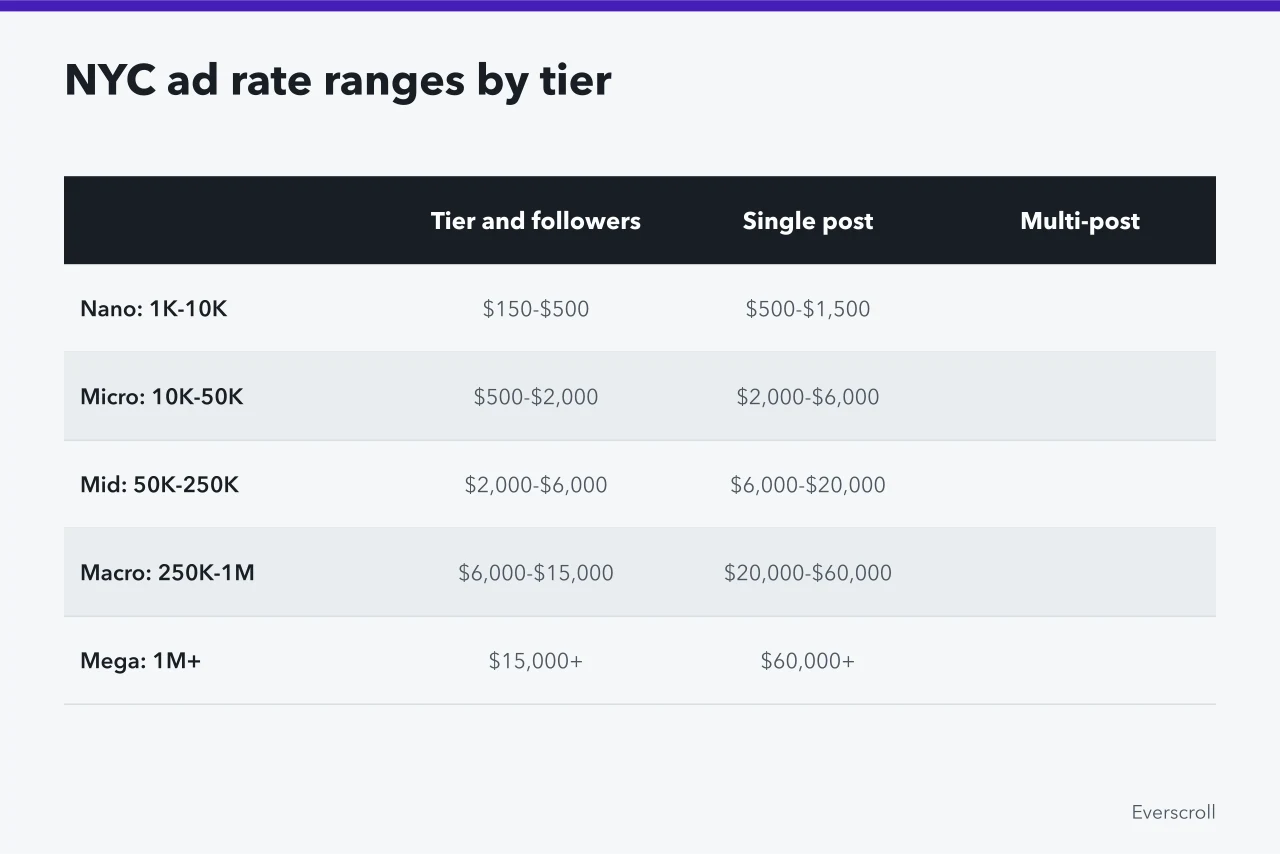
Reported New York rate ranges by follower tier, as described by creators and buyers working in the city.
| Tier | Followers | Single post | Multi-post campaign |
|---|---|---|---|
| Nano | 1,000 to 10,000 | $150 to $500 | $500 to $1,500 |
| Micro | 10,000 to 50,000 | $500 to $2,000 | $2,000 to $6,000 |
| Mid | 50,000 to 250,000 | $2,000 to $6,000 | $6,000 to $20,000 |
| Macro | 250,000 to 1,000,000 | $6,000 to $15,000 | $20,000 to $60,000 |
| Mega | 1,000,000+ | $15,000+ | $60,000+ |
Creators who work with New York agencies such as Digital Brand Architects and Whalar describe these ranges, as do media buyers at city-based brands such as Macy's and Estée Lauder. For a national baseline, Influencer Marketing Hub and Later both publish per-post rates by follower tier.
Typical brand deal terms reported by New York City creators
A New York City brand deal is usually a short statement of work, not a long contract. The brand names the deliverable, the fee, the posting window, and the rights it wants. Everything else is negotiable.
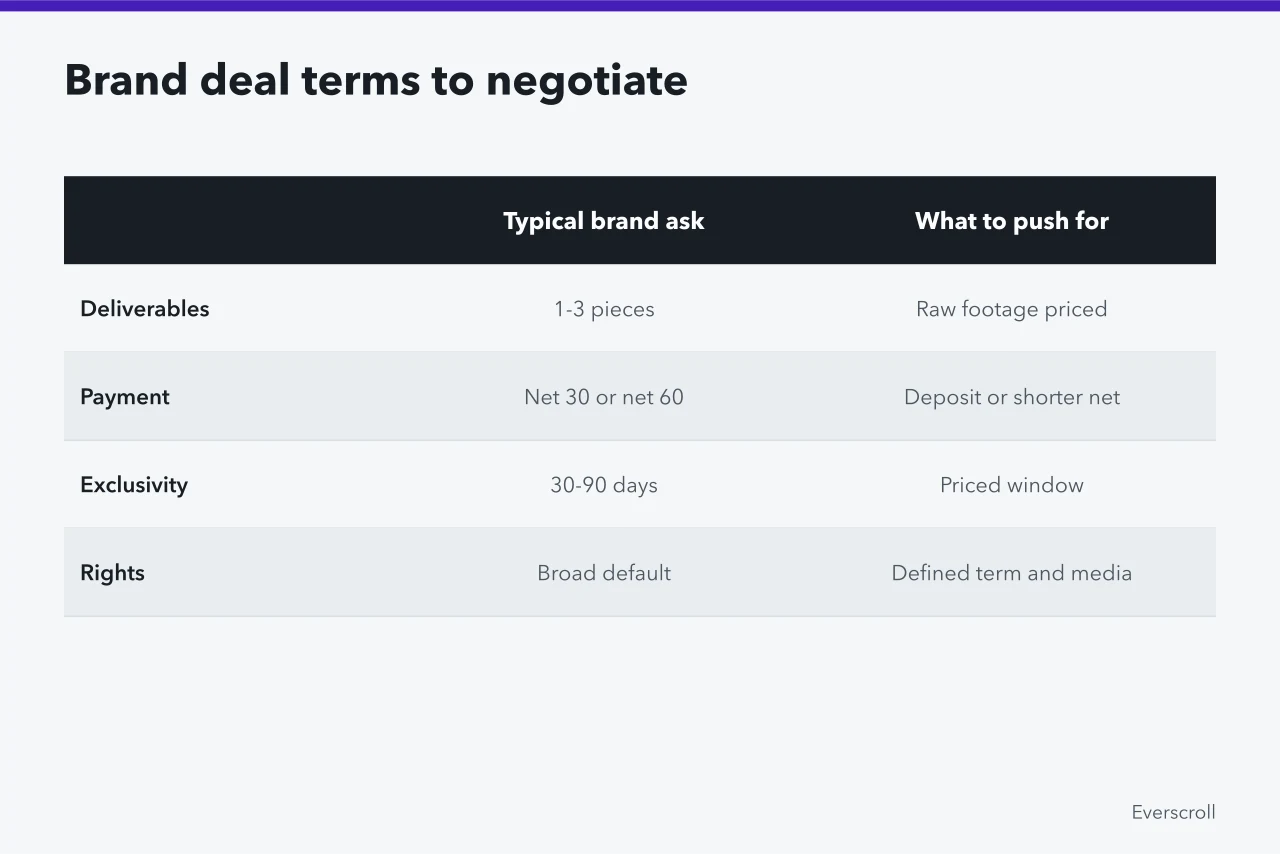
Creators working with beauty, fashion, and food brands in Manhattan and Brooklyn report the same core terms: one to three pieces of content, a set of talking points, a review round, and a deadline. The fee is flat, paid on a schedule the brand controls.
Deliverables get specific fast. A single Instagram Reel, a TikTok video, a YouTube integration of a stated length, or a carousel with a set number of frames. Brands in New York often ask for raw footage as well, which is a separate right and should carry a separate price.
Payment terms matter more than the headline fee. Net 30 and net 60 are both common, and net 60 means you may wait two months after posting. Ask for a deposit, milestone payments, or a shorter net term before you sign.
Exclusivity is where small accounts get hurt. A brand may ask you not to work with competitors for 30, 60, or 90 days around the campaign. That window has a cash value, and it should be priced.
For how a brand fee sits alongside ad revenue, affiliate income, and product sales, start with the creator income overview on this site.
Agency contracts and what to check before signing
Agency contracts creators sign in New York fall into two groups: representation deals and management deals. Representation usually covers brand deals only. Management can reach into your calendar, your inbox, and your rates.
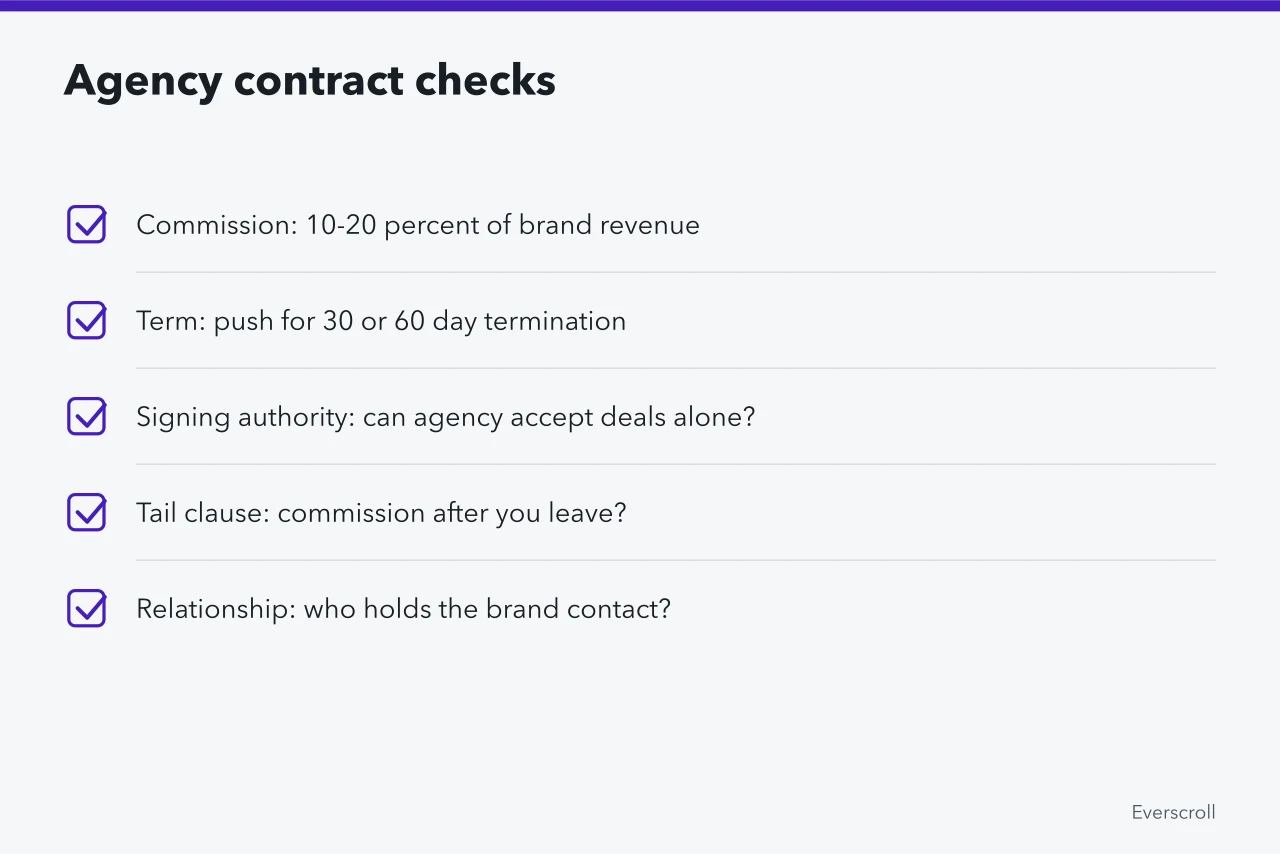
Commission is the first number to check. Ten to 20 percent of brand revenue is the reported range in the New York market. Anything above 20 percent needs a clear reason, such as in-house production or paid media buying.
Term and termination are the second. A one-year term with automatic renewal is common. Push for a 30 or 60 day termination clause so you are not trapped if the relationship sours.
Check what the agency can sign on your behalf. If it can accept deals without your approval, you have given away control of your own calendar and your own brand.
Check the tail clause. Some agencies claim commission on any brand that approached you during the term, even after you leave. That clause can follow you for a year or more.
Ask who owns the relationship. If the agency holds the brand contact and you never speak to the buyer, you lose the ability to negotiate directly later. Keep your own copy of every contact.
Advertising rate ranges reported by NYC creators and media buyers
Buyers in New York pay more than the national benchmark for the same tier and format. National rate guides, including ones published by Influencer Marketing Hub and Later, commonly put a micro-tier single post at a typical $100 to $500. New York quotes for the same post land at $500 to $2,000.
Media agencies, fashion houses, and finance brands all sit within a few miles of the creators they hire. That concentration is what holds the gap open.
Treat any single quote as a starting point, not a market rate.
Engagement rate moves the number more than follower count. A micro account in Brooklyn with a tight, engaged audience can out-earn a larger account with weak comments.
Format matters too. A YouTube integration takes more production time than a story frame, and buyers price it accordingly. Vertical video commands a premium over static images.
The Bureau of Labor Statistics publishes wage and employment data for media and entertainment occupations, which is useful context when you set your own floor. See the BLS occupation statistics for those categories.
Usage rights, exclusivity, and payment timing clauses
Usage rights decide how long a brand can keep using your content after the campaign ends. Perpetual, worldwide, all-media rights are the most expensive thing a brand can ask for, and they are often requested by default.
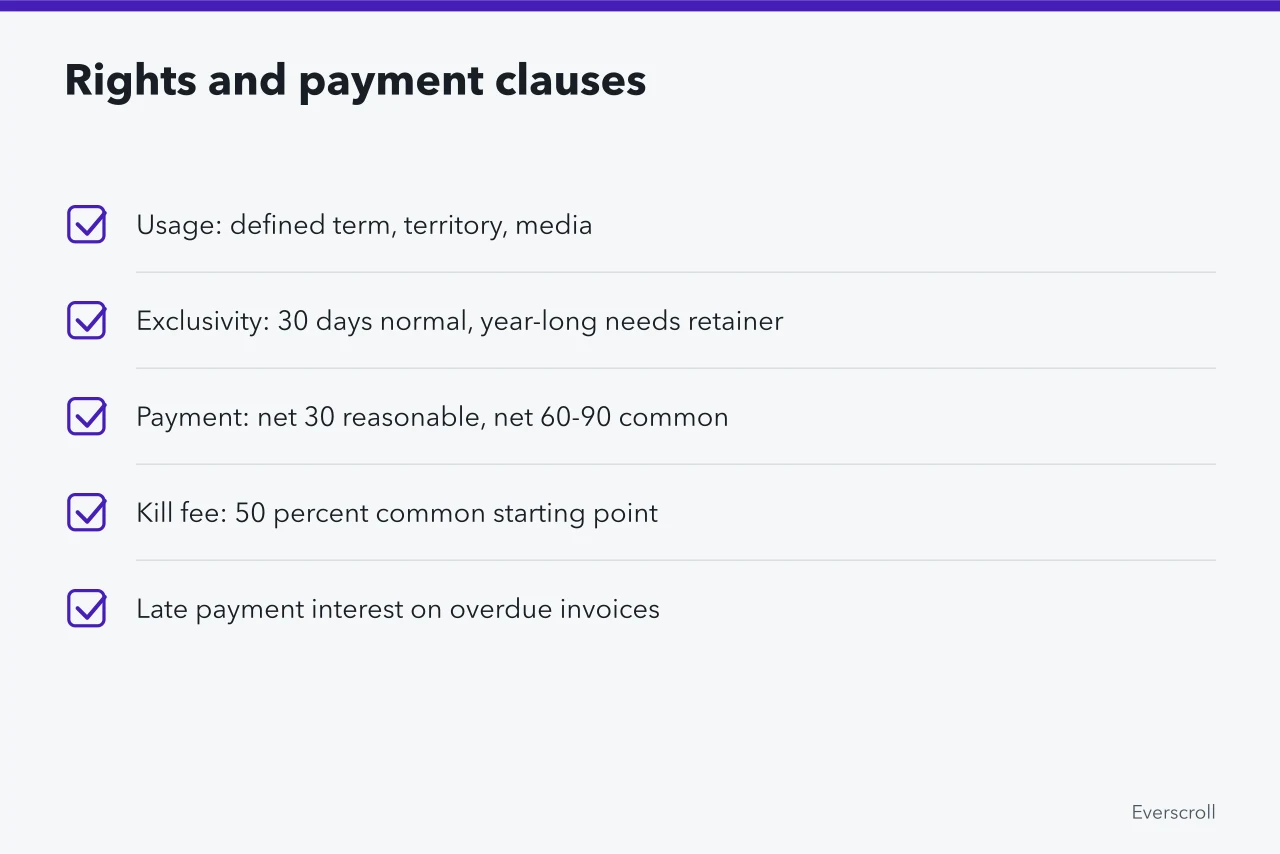
Push for a defined term: six months, one year, paid social only, or a specific territory. Each expansion should carry a fee. Renewal should be optional, not automatic.
New York Civil Rights Law §§ 50–51 addresses the use of a person's name, portrait, picture, or voice for advertising or trade without written consent. Specify in the contract which rights the brand may use, on which channels, and for how long.
Exclusivity is a separate clause. It restricts what you can do with other brands in the same category. A 30 day exclusivity window around a launch is normal. A year-long category ban is not, unless it is paid like a retainer.
Payment timing closes the loop. Net 30 is reasonable. Net 60 and net 90 are common with larger New York agencies and slow the cash cycle badly for a solo creator.
Ask for a kill fee. If the brand cancels after you have produced the content, you should still be paid a percentage. Fifty percent is a common starting point.
Late payment interest is worth adding. A simple clause charging a monthly percentage on overdue invoices gives you something to point to when payment slips.
Negotiating room for small New York accounts
Small accounts have less room on price and more room on terms. You can often trade a lower fee for shorter exclusivity, narrower usage rights, and faster payment.
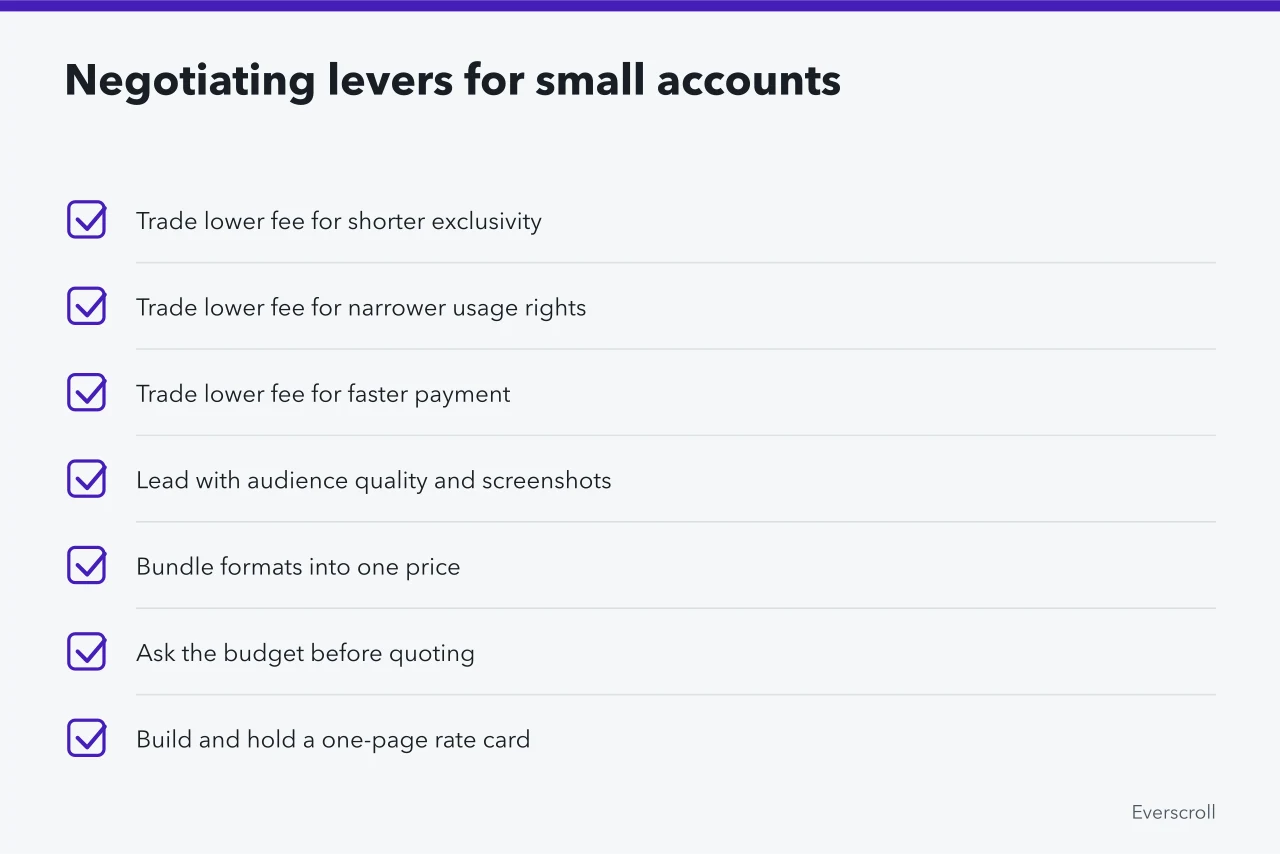
Audience quality is your strongest argument. A New York buyer cares about who is watching, not just how many. Bring screenshots of comments, saves, and direct messages.
Bundle your formats. Offering a Reel plus a story plus a still image at one price is easier for a buyer to approve than three separate line items.
Ask about the budget before you quote. Buyers in New York often have a range already approved, and quoting below it leaves money on the table.
Build a rate card and hold it. A one-page rate card with your formats, prices, and standard terms saves time and signals that you have done this before.
Keep your income spread across several brands. A single large client can vanish in a quarter, and creators who lean on one deal are the ones who get squeezed when it does.
A contract review checklist before a New York brand deal
Run this list before you sign anything. It takes ten minutes and prevents most disputes.
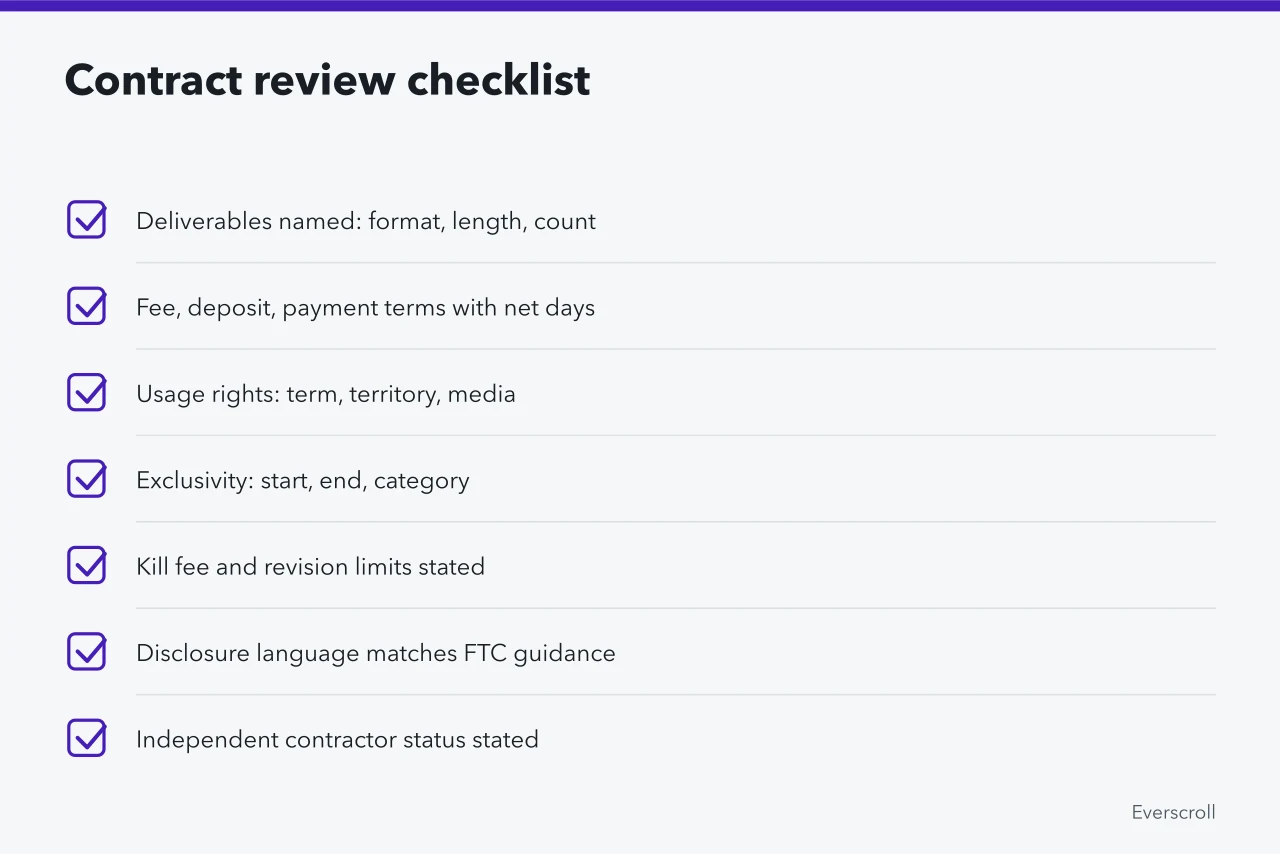
The Federal Trade Commission requires clear disclosure when you have a material connection to a brand. Its Disclosures 101 for Social Media Influencers explains what that means in practice for sponsored posts.
Native advertising, where sponsored content is designed to look like editorial, carries its own expectations. The FTC's Native Advertising: A Guide for Businesses covers how those placements should be labeled.
Independent contractor status is not something a contract can simply declare into existence. The Department of Labor's guidance on misclassification of employees as independent contractors sets out the factors that actually decide the question.
Keep records of every deal: the signed contract, the invoice, the payment, and the posted content. A dated folder per brand is enough.
When a clause is missing, write it yourself before you sign. Three are worth drafting in advance.
Contract review checklist
- Usage. "Brand gets a paid social licence for Instagram and TikTok in the United States for six months from first posting. Paid media use, brand-owned channels, and any use after six months carry a separate fee."
- Exclusivity. "Creator will not promote a competing brand in the same category for 30 days from the post date. Each extra 30 days costs 25 percent of the fee."
- Kill fee. "If the brand cancels after the creator delivers a draft, the brand pays 50 percent of the total fee."