Guides
Why does creator income feel so different from a regular paycheck at tax time?
This page gives a decision sequence for creator taxes. It identifies the reader, first action, evidence gate, exception, stop rule, and next review so advice.
What to take away
- A paycheck arrives with tax already removed. Creator income arrives whole, and the bill lands later.
- Move 25 to 30 percent of every payment into a separate account on the day it clears. Treat that as a starting range, not a rule.
- What you earned and what a platform reports are two different numbers. Your books need to show both.
- In the US, estimated payments fall due on April 15, June 15, September 15 and January 15, and self-employment tax runs at 15.3 percent of net profit.
- Keep records for at least three years after you file.
Why nothing is withheld
In a job, the employer does the arithmetic. It holds back income tax, splits Social Security and Medicare, pays them across and sends you a W-2 in January. What reaches your account is close to yours.
Self-employment deletes every one of those steps. Payments arrive whole. A share of each one was never yours. It sits in your account until it is due, and nobody calculates it except you.
The figure that catches people out is self-employment tax. In the US it is 15.3 percent, charged on 92.35 percent of your net profit, and half of the result comes back as a deduction against income.
Employment vs Self-Employment
Employment
- Who calculates tax
- Employer
- Who withholds
- Employer
- Who keeps records
- Employer
- Money arriving
- Net of tax
- Year-end summary
- Provided
Self-Employment
- Who calculates tax
- You
- Who withholds
- Nobody
- Who keeps records
- You
- Money arriving
- Whole payment
- Year-end summary
- You make it
How much to set aside
A practical starting range is 25 to 30 percent of every payment. Your real number depends on your bracket, your state and your profit, so check it once you have a year of figures.
The habit beats the percentage:
- Open a second account you never spend from.
- Move the set share the day each payment clears.
- Touch it only for estimated payments and the April balance.
- Recheck the share after your first full year, using real numbers.
Recurring income changes the arithmetic. Membership money arrives in small amounts all year, so the set share holds steady while the tax spreads across the calendar, as creator memberships sets out.
The Set-Aside Habit
- Open a second account, not your spending account
- Move a fixed share of every payment on arrival
- Take no withdrawals for anything else
- Review the share with an accountant
- Check against income benchmarks for your situation
Example: one sponsorship, two numbers
A brand contracts you for $1,000. An agency handles the deal and takes 20 percent from your side, so $800 arrives. The payer may still report $1,000, because that is what it agreed to pay.
One sponsorship, two numbers
- Contract value
- $1,000
- Agency fee at 20 percent
- $200
- Cash received
- $800
- Income you record
- $1,000
- Fee you deduct
- $200
- Set aside at 30 percent of cash received
- $240
The two numbers are not a mistake. Your return shows $1,000 of income and a $200 business expense. The brand deal guide covers how third-party payment splits work.
What counts as income
Assume a category counts until you have checked that it does not:
- Ad revenue, tips, memberships and platform payouts.
- Affiliate commissions, which often land months after the click. The affiliate income checklist keeps the schedule straight.
- Sponsorship fees, appearance fees and speaking fees.
- Digital product sales and print-on-demand merchandise.
- Free products, gifted stays and paid trips where coverage is expected.
- Money paid into a personal account instead of a business one.
Gifted items are the category creators most often assume is invisible. The value adds up faster than people expect.
Forms and deadlines
US payers and platforms put specific paperwork in front of you.
- Form W-9a payer asks for it before paying. Give it, or the payer may withhold.
- Form 1099-NECa business client reports $600 or more paid to you in a year.
- Form 1099-Kplatform payments. The threshold has moved several times, so check the current figure.
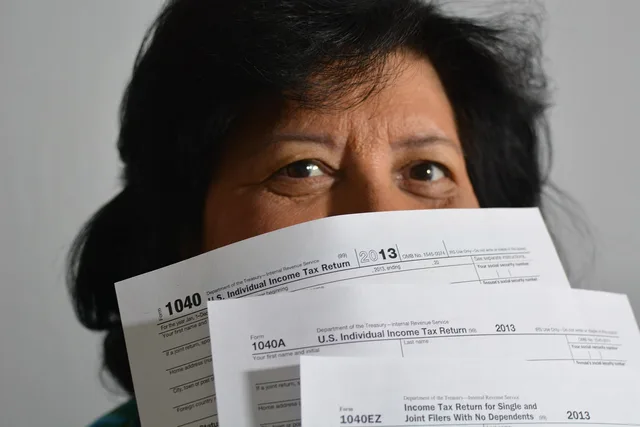
- Schedule C and Schedule SEfiled with your 1040 to report profit and self-employment tax.
- Estimated paymentsApril 15, June 15, September 15 and January 15. The IRS guidance on estimated taxes explains how the amounts are worked out.
An underpayment penalty accrues on the shortfall, not on your total income.
Records and retention
Almost every expensive tax problem is a records problem. The workable minimum:
- Contracts, invoices and monthly platform statements.
- Bank and payment app exports for the account that receives income.
- Receipts plus a mileage log for mixed-use costs like a phone, car or spare room.
- A dated note for each gifted product, with its approximate value.
Keep records at least three years after you file. The IRS recordkeeping guidance notes that some situations call for longer. Reconcile monthly, because a year-end pile hides deductions.
Structure: sole proprietor, LLC and S-corp
Sole proprietor, LLC and S-corp
What changes
- Sole proprietor
- Nothing to file. Profit goes on Schedule C.
- Single-member LLC
- State registration fee and separation of money. Liability shield if you keep it clean.
- S-corp election
- Payroll, a reasonable salary and a separate return.
What does not change
- Sole proprietor
- Personal liability for business debts.
- Single-member LLC
- Federal tax, by default. Profit still runs through your return.
- S-corp election
- Payroll tax on the salary portion.
The S-corp election only pays off at higher profit, because payroll and filing costs are fixed. The SBA sets out the liability side in its guide to choosing a business structure.
Common questions
How much should I set aside from a side income?
Do platforms report my earnings?
Can I deduct a phone, a car or a room at home?
When is an accountant worth paying for?
In this guide
- Creator Taxes Mistakes: Fix Return Errors Before FilingCreator taxes mistakes can distort Schedule C or Form 1040. Trace mixed accounts, reconcile 1099s, and correct missed estimates or unsupported deductions.
- Creator taxes examples: twelve invented situations and what to recordCreator taxes examples: twelve invented situations showing what to record when money arrives, and which questions belong to an accountant instead.
- Creator taxes framework: five record-keeping routinesA creator taxes framework of five record-keeping routines: capture, separate, set aside, reconcile and ask on recurring schedules.
- Creator tax tools shortlist: what bookkeeping software must record and what it cannot decideA shortlist of bookkeeping tools for creators by record quality, the fields every candidate needs, and the tax calls that software cannot make.
- Creator taxes questions: what to record and who to askCreator taxes questions, answered as process rather than numbers: what to record, why barter and foreign pay need care, and how to choose help.
- Creator taxes trends: the shifts that matterCreator taxes trends for 2027 as structural shifts: platform reporting, mismatch letters and specialist advice, with no rule or threshold stated as fact.