Rules
Creator merch: model, rights, drops and support decisions
Creator merchandise in plain terms: print on demand or stock, which cost lines to quote, rights to clear, drops or a store, shipping rules and customer support.
Creator merchandise is the only creator income line that involves a warehouse, a courier and somebody emailing you at midnight because the hoodie does not fit. It is a small retail business wearing a t-shirt, and it should be judged like one.
What to take away
- Rights are where merch generates real, expensive problems.
- Drops concentrate demand into a window, let you produce close to the quantity ordered, create a reason to pay attention, and stop the store going stale.
- Once you sell physical things you have customers, and customers have problems: wrong size, never arrived, damaged, wrong address entered, changed their mind, wants it before an event.
- For plenty of creators, merch is not really an income line.
Two models, and the trade between them
Almost every decision downstream follows from this one.
Print on demand vs stock
Print on demand
- Cash at risk
- None
- Unit economics
- Thinner
- Quality control
- Sample and hope
- Range
- Wide catalog
- Shipping
- Provider decides
- Failure mode
- Low margin
Buying stock in advance
- Cash at risk
- Spent before sale
- Unit economics
- Better at volume
- Quality control
- You choose
- Range
- Costly per variant
- Shipping
- Yours to control
- Failure mode
- Unsold boxes
Two models, and the trade
Print on demand
- Cash at risk
- None. Items are made after they sell
- Unit economics
- Thinner, because someone else prints one at a time
- Quality control
- You approve a sample and hope; blanks and print methods are chosen for you
- Range
- Wide catalog at no extra cost
- Speed and shipping
- Whatever the provider does, from wherever they do it
- The failure mode
- Low margin, generic product, complaints you cannot fix
Buying stock in advance
- Cash at risk
- Real money, spent before a single sale
- Unit economics
- Better at volume, and improves as quantities rise
- Quality control
- You choose the blank, the print method and the finishing, and can reject a bad run
- Range
- Every extra size and color is more money on a shelf
- Speed and shipping
- Yours to control, and yours to pay for
- The failure mode
- Boxes of unsold XS in your hallway
There is a middle path, and it is where most creators should start: small batches, or a drop that takes orders for a fixed window and produces to the quantity actually sold. You carry the cash risk only briefly, and you learn your real size curve without guessing.
Write out the entire cost stack before you price anything
Get quotes and fill this in yourself. The point is not the numbers; it is that most people count the first two lines, price off those, and discover the rest afterwards.
Full merch cost stack
- Blank or base item
- Decoration per color and position
- Setup and origination per design
- Storefront or platform fee
- Payment processing
- Inbound freight and storage
- Pick, pack and packaging
- Outbound shipping, returns, defects, lost parcels, duties, tax
The entire cost stack
| Cost line | Notes |
|---|---|
| Blank or base item | The garment, mug, poster, whatever it is printed on |
| Decoration | Screen print, embroidery, DTG, sublimation: priced per color, per position, per unit |
| Setup and origination | Screens, plates, digitising for embroidery; charged per design, not per unit |
| Storefront or platform fee | Per order, per month, or a percentage |
| Payment processing | Percentage plus fixed fee, and higher on cross-border payments |
| Inbound freight | Getting stock from the printer to wherever it ships from |
| Storage | Space, or a fulfillment partner's per-item monthly charge |
| Pick, pack and packaging | Labor plus mailers, tissue, inserts, labels |
| Outbound shipping | By weight, by destination, and different again for tracked delivery |
| Returns and exchanges | Return postage, a second outbound shipment, and an item you may not be able to resell |
| Defects and reprints | Misprints, damage in transit, wrong item sent |
| Lost parcels | They happen at a steady rate and you usually eat the cost |
| Duties, customs and cross-border handling | Who pays, and what happens when the customer refuses a surprise charge |
| Sales tax, VAT or equivalent | Collection and remittance rules depend on where you and your buyer are: check current guidance for your situation |
| Unsold stock | The stock you wrote off, spread across the units you did sell |
For sales tax in the United States, the rules are set state by state, so the authority to check is the revenue department of each state where you are required to collect, not the platform's help page.
The last four lines are what usually turn a drop that looked profitable into one that was not. Gross margin per unit is not profit; it is the number before the business happens.
Choose fewer things, and better ones
Every variant multiplies the work, the way an extra income line multiplies across a creator career. That is the argument for narrowing before you widen.
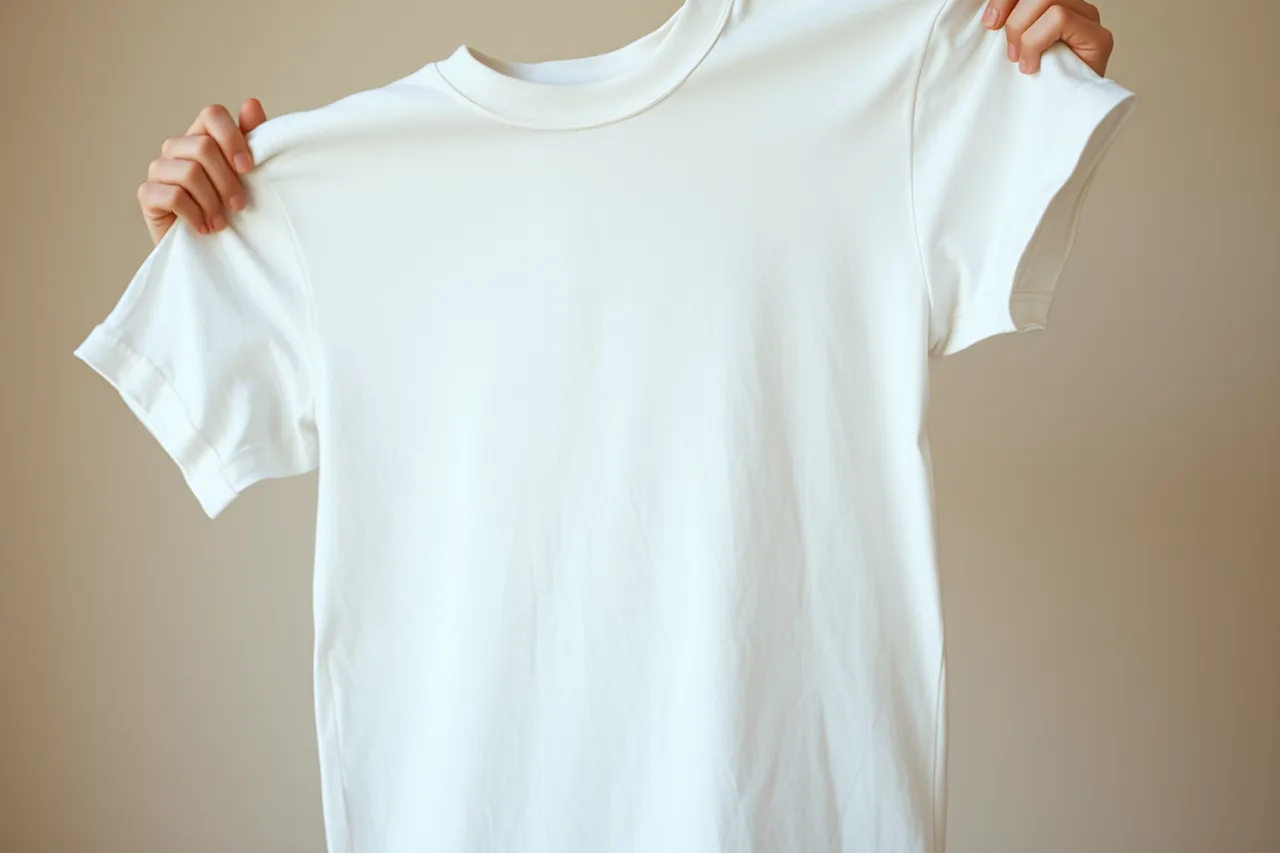
The base item is the product. Nobody remembers the design on a shirt that feels wrong after two washes. A cheap blank generates returns, bad word of mouth, and a reputation that outlasts the drop.
Order samples the way you would test any platform or program before depending on it. Wear them, wash them repeatedly, check whether the print cracks and whether the color holds. Do this before you announce anything, because the lead time to fix a bad blank is measured in weeks.
Keep the range narrow. Every color multiplies your size range, and every size is a separate bet. Size curves are hard to predict even with history, and your audience's curve will not match a generic one.
The middle sizes sell out first, and the extremes strand you either way. Extended sizing is worth offering; just know it widens the guess.
The cheapest way to cut returns is an honest sizing guide. Give actual garment measurements, laid flat, not a vague small-medium-large chart. Add a note about the fit and what the person in the photo is wearing.
That is a description, not a claim. The difference matters: anything you assert about the goods is an advertising claim. An affiliate recommendation also has to stand behind it.
Do not print what you do not own
Rights are where merch generates real, expensive problems.
Rights to clear before printing
- Fonts licensed for goods for sale
- Stock images with extended merchandise license
- Written agreement with photographers and illustrators
- Collaboration terms on ownership and service
- No brand, character or logo you do not own
- Paperwork kept with the design file
- Fontsare licensed, and a desktop license frequently does not cover putting the type on goods for sale. Check the license for each font before it goes on a product. What a license is granting away is easier to see against the United States Copyright Office's overview of what copyright covers.
- Stock images and vectorsusually exclude use on physical merchandise, or require an extended license for it.
- Photographers, illustrators and designersneed a written agreement covering what is being made, how many, for how long, in which territories, and how they are paid: flat fee, royalty, or both. "We collaborated" is not a license.
- Collaborations with other creatorsneed the same clarity, especially about who owns the artwork afterwards and who handles customer service.
- Someone else's property(a brand, a character, a logo, a photograph of a public figure), is a risk you carry personally. The printer will not carry it for you, and the fact that others do it is not a defense. Names are a separate question from images, and the United States Patent and Trademark Office's introduction to trademarks explains why a word can be free to say and not free to sell in a category.
Keep the paperwork with the design file. Two years later, when you want to rerun something, you will need to know exactly what you were allowed to do. A collaboration with a company is a contract like any other, and the care it needs is the care set out under brand deals.
Drops or an always-on store
Drops concentrate demand into a window, let you produce close to the quantity ordered, create a reason to pay attention, and stop the store going stale. The cost is that each one is a project with a deadline.
Drops or always-on store
Do you want concentrated demand and a deadline?
Run a drop and produce to orders
Run an always-on catalog and mind stock
An always-on catalog earns quietly but needs somebody minding it: stock levels, seasonal items, dead SKUs, and a shop page that does not slowly fill with things nobody has bought in a year. A store that is permanently discounted is not a store, it is a signal that the prices were never real.
Whichever you choose, decide before launch: where you will ship, what the delivery estimate is, and what happens when a parcel is late. Announce those on the product page, not in an apology afterwards.
In the United States this is also a legal duty. The FTC's Mail, Internet, or Telephone Order Merchandise Rule requires sellers to have a reasonable basis to expect that they can ship within the advertised time frame, or, if no time frame is specified, within 30 days. When a seller cannot ship within the promised time, it must obtain the buyer's consent to a delay in shipping or refund payment for the unshipped merchandise. A drop with a long production window needs its shipping date stated up front for exactly this reason.
Support becomes part of your week
Once you sell physical things you have customers, and customers have problems: wrong size, never arrived, damaged, wrong address entered, changed their mind, wants it before an event.
Policies to publish before complaints
- Returns window
- Who pays return postage
- Replace or refund a defect
- Parcel marked delivered but missing
- One email address on the site
- Stated answer timeframe
Decide the policies before the first complaint and publish them: your returns window, who pays return postage, whether you replace or refund a defect, what you do about a parcel marked delivered that the customer says never came. Then put one email address on the site and answer within a stated timeframe.
The reason to write this down in advance is that in the moment you will either be too generous, which loses money on every order, or too rigid, which loses the customer publicly. A policy you decided calmly is fairer to both of you.
Be honest about what merch is for
For plenty of creators, merch is not really an income line. It is marketing that pays for itself, or a way to give the people who like you most something to hold. That is a perfectly good reason to do it.
Is merch a business or a gift
After real costs and your hours, what is left?
Breaks even and you enjoy it -> Keep doing it deliberately
Loses money and eats paying work -> Make it a decision, not a failure
The mistake is running it as a business while it functions as a gift, and never noticing because the revenue line looks healthy. Total the real costs, including your hours packing boxes and answering emails, and see what is left. Creators who treat merch as a real income line should compare it with other platform revenue models before committing.
If the honest answer is that it breaks even and you enjoy it, keep doing it deliberately. If it loses money and consumes the time you would otherwise spend on the work that pays, that is a decision, not a failure, and it is worth making it on purpose.
Common questions
How much stock should a first run be?
Less than feels right. The purpose of run one is to learn your size curve, your return rate and your fulfillment costs, not to maximize profit. Pre-orders or a made-to-order window remove the guess entirely.
Should I ship it myself?
At small volumes, yes: you learn what the costs and complaints actually are, and that knowledge makes the decision to outsource a good one later. Past a few dozen orders a week it stops being a reasonable use of your time.
How do I handle international orders?
Decide whether you ship abroad at all, and be explicit about who pays duties and how long delivery takes. Surprise customs charges produce refused parcels and angry emails, and the parcel that comes back is usually the whole margin on ten orders.
Is a licensing deal better than doing it myself?
Sometimes. A partner who handles production, fulfillment and support takes a large share and gives you back your evenings. Read what they control: design approval, pricing, which products carry your name, and what happens to the relationship when you stop.
In this guide
- Reading the merchandise examples closelyMerchandise examples, twelve invented cases covering rights, sizing, printed claims, drops and the storefront nobody closed, with what each one teaches.
- Merchandise Framework: Six Decisions for CreatorsThis merchandise framework covers six decisions for creators: purpose, range, rights and claims, production, selling format, and closure.
- Merchandise metrics that actually change a one-person business's decisionsMerchandise metrics that actually change a decision: landed cost per unit, sell-through by variant, inventory age, support minutes and return on hours.
- Merchandise tools worth trusting: storefront and fulfillment, plus a rights checklistNamed merchandise tools for 2027 judged on storefront, fulfillment and rights, with Shopify, Printful, Printify, Gooten and Gelato compared and a rights checklist for each design.
- Four pressures shaping creator merchandise and what each one changesFour pressures on creator merchandise in 2027: production with Printful, Printify and Gelato, cross-border delivery rules, buyer expectations, and platform shops with consumer rules.